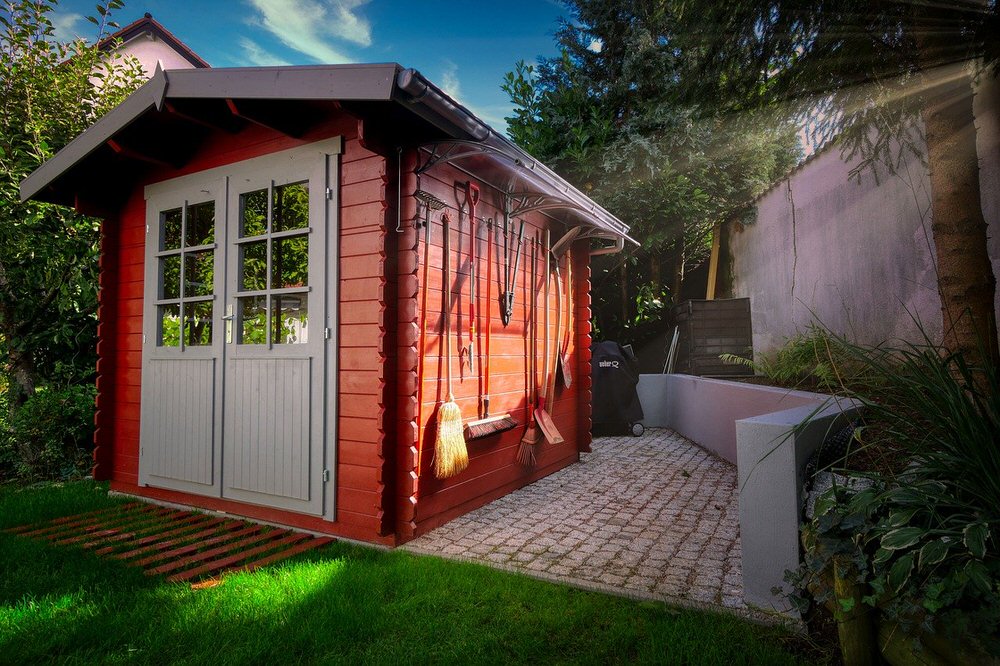
Winter can be surprisingly hard on a shed base. Frost shifts the ground, moisture seeps into tiny cracks, and by early spring many shed owners notice something feels slightly off – a faint wobble, a damp corner, or a door that no longer closes cleanly.
Freeze-thaw cycles, heavy rain, and soggy ground can shift support points without you noticing. Then spring arrives, and the shed feels… slightly wrong. Not broken. Just not as it was.
If your building came from Garden Buildings Direct, the structure itself is often built to take years of use. The base, though, still lives at the mercy of the ground.
What usually changes after winter?
The ground underneath rarely returns to the exact same shape it had in autumn.
Soil expands when it freezes, then drops as it thaws. Sometimes it settles evenly. Often it does not. A few millimetres is enough to twist a door frame or create a low point where water sits.
And yes, it can happen even if the shed “looks fine”.
1) Do a quick stability walk-around
Start outside. Walk the perimeter slowly and look at the bottom edge of the shed, not the walls.
You are looking for simple clues:
- gaps under the base on one side
- a corner that looks slightly lower
- any contact point that seems to have “sunk” into the ground
Then step inside and shift your weight around. If the floor gives a tiny rock or bounce in one spot, note where it is.
One uneven patch does not mean disaster. It just means you should not ignore it.
2) Check the door, because it tells the truth
A door that used to close cleanly but now catches is often a base issue first, not a hinge issue.
Open it slowly. Close it slowly. Feel for rubbing, sticking, or a change in alignment. If you see daylight along one edge where there was none, the shed has probably moved a touch.
This is the kind of problem that gets worse if you keep forcing it through the summer.
3) Is water pooling around the base?
If water pools near the shed, fix drainage first before you “fix” anything else.
After rain, look at where water sits and where it travels. Winter can compact soil, shift gravel, or clog the natural runoff path with leaves and muck. It is not dramatic, but it is enough.
A lot of base rot starts with water that has nowhere to go.
For bigger timber buildings, including quality garden sheds, that repeated damp at the edge is a slow problem, not a loud one. You only notice it when it has been there for a while.
4) Spot early damp and rot before it spreads
You do not need special tools for this. You just need to actually look, and maybe press a thumb into the timber in a couple of places.
Check corners, shaded sides, and anywhere air does not move much. Signs can be plain:
- darker timber at the base edge
- softness when pressed
- a musty smell that lingers even on a dry day
Sometimes you will find nothing. Great. Sometimes you will find a small patch. Also fine, as long as you catch it early.
5) Small corrections now save awkward repairs later
If you find a low spot or wobble, deal with it early. With assistance from another person, loosen the anchors and tip the shed up (you might have to empty it first), then add additional support underneath to raise it back to level. If necessary, the shed might have to be moved while you re-level the ground.
Avoid temporary fixes like stuffing loose wood underneath. It may hold briefly, but it will shift again. Stabilise the ground and supports properly instead.
A simple spring routine that keeps the shed steady
Most sheds do not fail suddenly after winter. They drift out of level, get damp at the edges, and slowly pick up damage from the bottom up.
Spend half an hour in spring checking the base, the door alignment, drainage, and early damp signs. If you catch problems at the “slightly off” stage, you usually keep them small.
That is the aim. A stable, level, and dry base is what keeps the entire structure performing as it should.