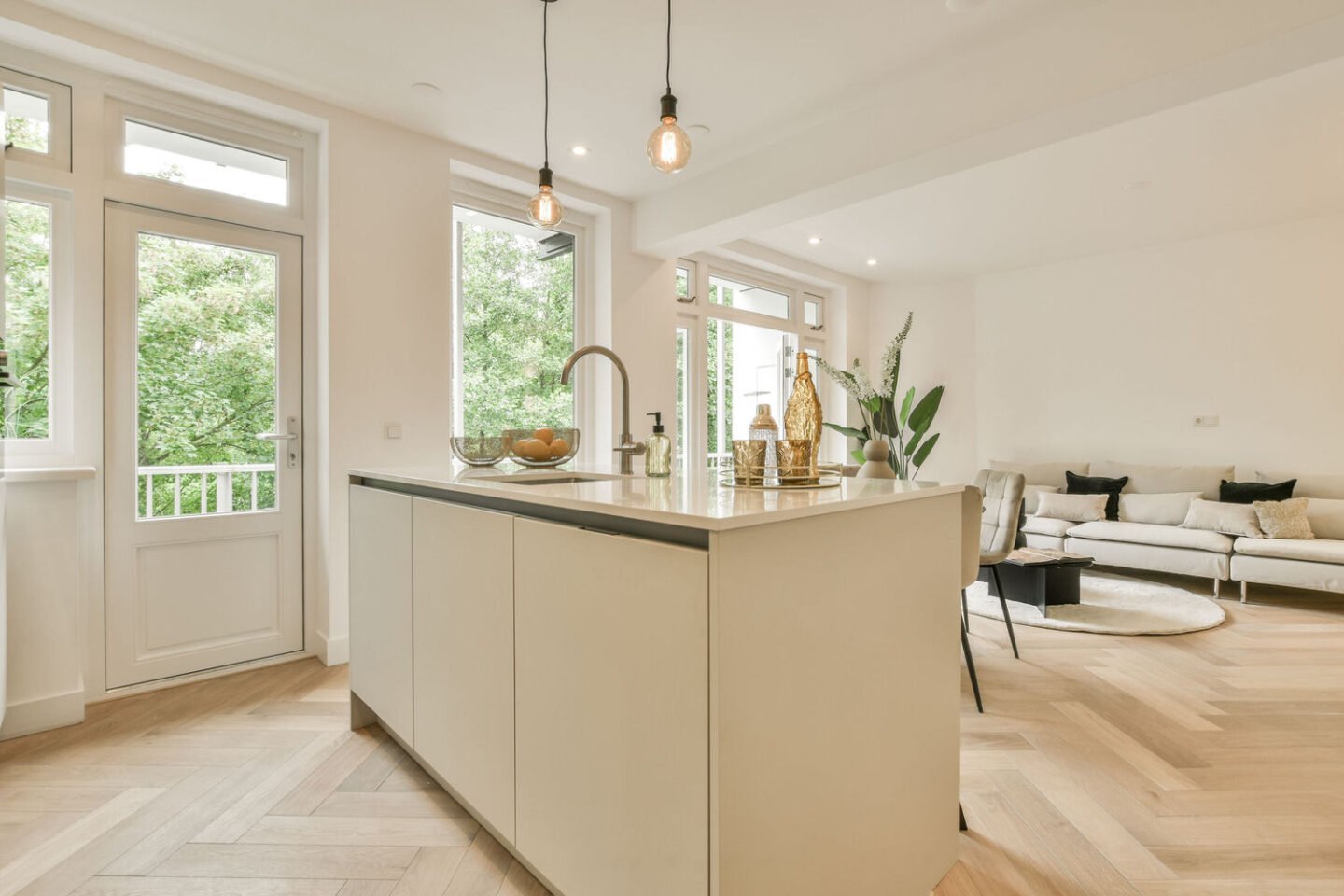
In the world of kitchen design, the beauty lies in the details, and the spaces that stand out the most are rarely those that incorporate one material alone. In fact, if you want to bring depth, character, and balance into your space, mixing materials is a smart idea. This way, your space will evolve from a functional one to a truly show-stopping. But of course, this is often easier said than done. Mixing materials requires a thoughtful and intentional approach in order to achieve harmony, add visual texture, and avoid clashing elements that could negatively impact consistency. If it sounds intimidating, don’t worry; we’re here to guide you through the process so you can design a space that feels equally timeless and fresh. Ready to dive in?
Consider your vision
Do you know what every great kitchen design starts with? A clear vision. So, before you choose colours, countertops, or cabinets, take a step back and think about the feel and look of your kitchen.
Give yourself permission to dream a little and visualize what kind of space would genuinely work for you and your unique lifestyle. It’s really important not to skip this step, because without a clear vision, you’re likely to feel overwhelmed or create a design that won’t just feel right for you. On the other hand, when you know what you want, every decision will be more focused and a lot easier, from lighting to layout.
Start with a base material or colour
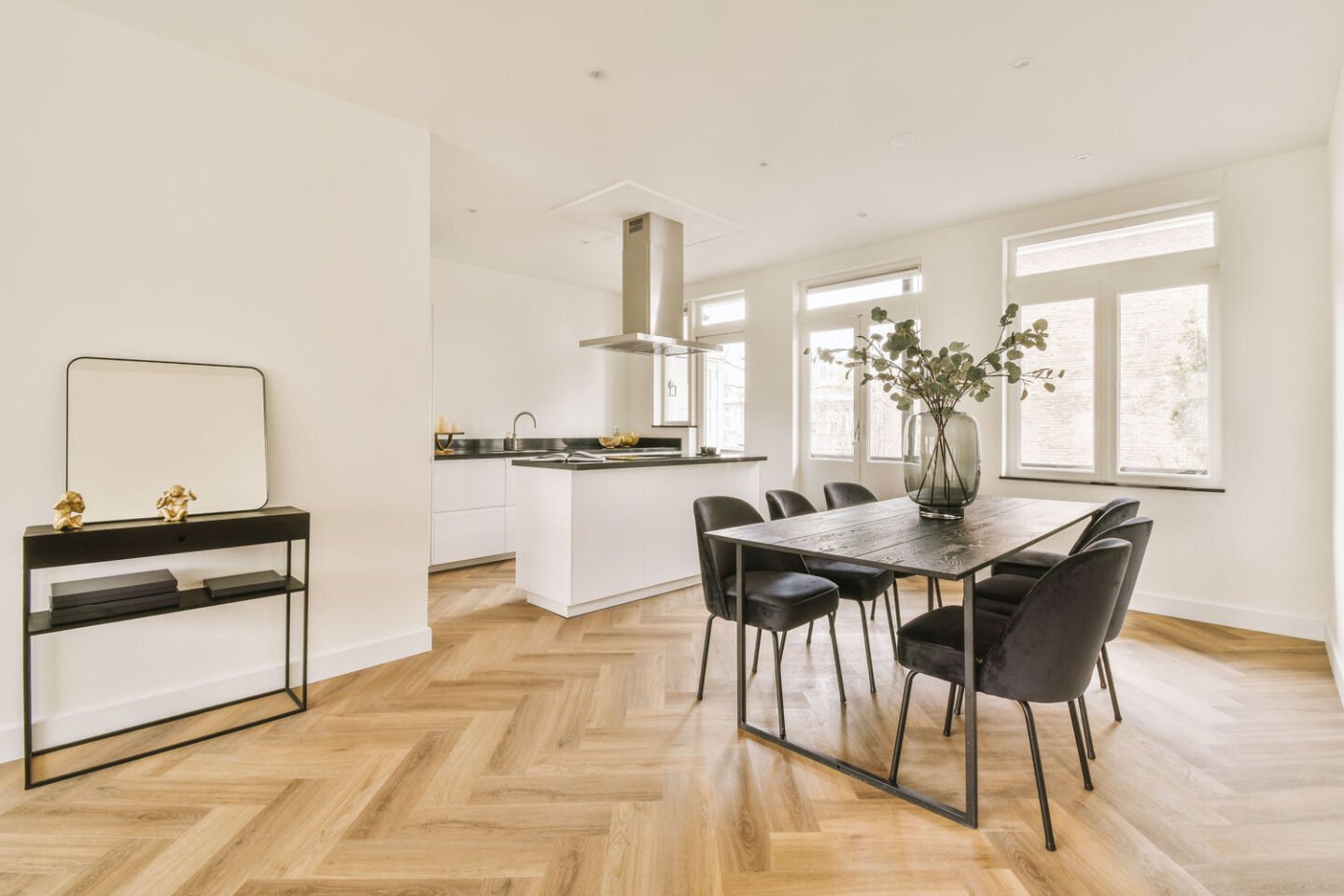
To successfully mix materials in your kitchen design, consider starting with a foundation. In other words, pick a main colour or material that will be predominant in the space, as this will give you a canvas upon which you can layer the rest of the materials and finishes.
Whether a stone countertop, a hardwood floor, or a metal light fixture, this base material will work like an anchor in the space, setting the tone for the room. Experts often recommend utilizing neutral colours on the floor and walls and then incorporating layers of mixed materials to give interest and depth, just like in a micro shaker kitchen.
Choose the right material combinations
There’s no doubt you have to be creative when approaching kitchen design like this, but you also need to learn how to combine materials to achieve a layered look. For example, wood and quartz are a match made in heaven, helping achieve a balance between luxury and warmth in the cooking space. Similarly, wood and matte black pair well for a Scandi or minimalist design, bringing forth a modern and calming atmosphere, while marble and brass represent a classic duo exuding luxury.
Brushed brass fixtures or cabinet handles with white marble countertops offer a contemporary and sophisticated appeal. If you’re looking for a more industrial look, metal and glass are the perfect pair, but the key is to find balance between the two, as too much metal will make the kitchen feel cold, while pairing it with glass accents will provide a more airy and lighter feel. A common mistake when combining materials in the kitchen is using too many of them, this can make the space feel chaotic, so it’s best to limit the number. As a general rule, a maximum of three to four essential materials in your design is enough. For instance, you can mix wood cabinetry with a tile backsplash and a marble countertop, and incorporate a metal accent in your hardware or lighting.
Take scale and proportion into account
When mixing materials, the proportion and scale of each element matters. While large slabs of marble and granite can be striking, combining them with intricate materials could overwhelm the design, so it’s best to maintain balance between the materials by considering the kitchen’s size as well as each element’s scale.
If you have a larger space, you don’t need to worry that much, because it will handle bigger materials. However, for a smaller kitchen, lighter materials are recommended so the space doesn’t feel cramped.
Use similar finishes for complementary materials
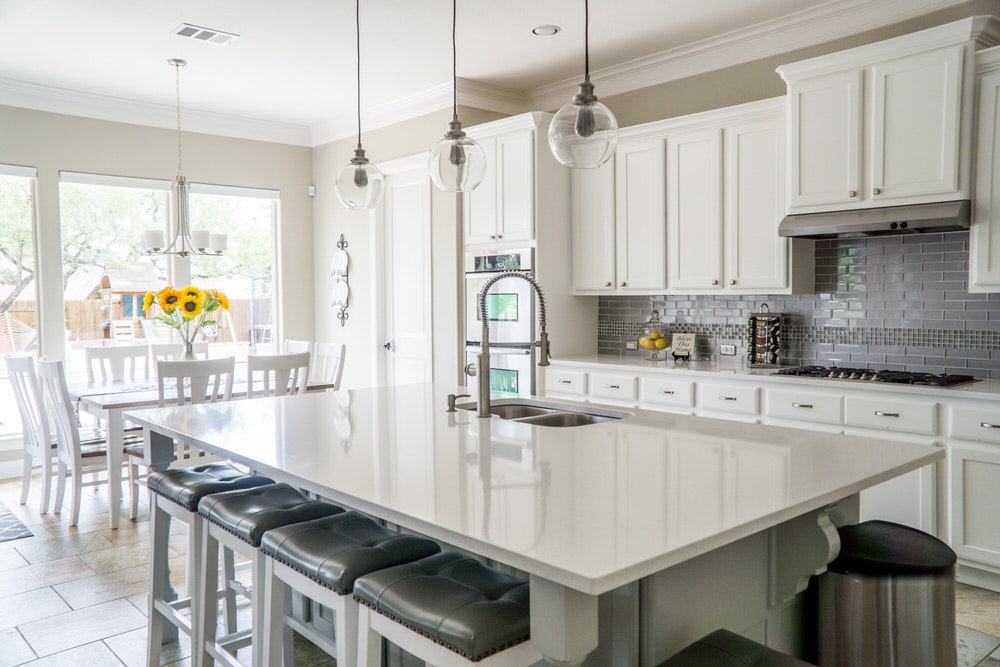
One of the simplest ways to ensure a cohesive look in the kitchen when mixing materials is to stick to those with similar finishes. For instance, a matte wood finish is beautifully paired with a concrete or matte stone countertop.
Polished metals, on the other hand, go well with high-gloss or glass finishes. Matching your materials’ finish is important because it will help prevent a busy feel in the kitchen while ensuring the materials blend smoothly together.
Functional benefits you’ll notice in the kitchen after mixing materials
While open layouts are beautiful, they can start blending together if there aren’t any visual boundaries. Mixed materials help tackle this problem right away: by incorporating a different countertop material, island finish, or backsplash style, you can “zone” the space to ensure each area feels intentional. For instance, a warm wood island cues the gathering space, while a sleek stone perimeter can designate the cooking zone. This is an easy way to add balance, structure, and flow to a kitchen that opens into the dining or living area.
Improved durability where it matters the most
Kitchen materials aren’t all created equal. But when you embrace a mixed-material kitchen, you don’t have to stick to just one material, and that’s precisely the beauty of it. You can place your hardest-wearing surfaces wherever needed: for example, heat-resistant surfaces near the range, and quartz or natural stone in high-traffic areas. This mix will elevate your kitchen’s look while ensuring the space holds up beautifully to daily use.
Enhanced sound, comfort, and livability
Open-concept homes and large kitchens have their advantages, but they struggle with sound balance and echoing. Incorporating different materials, like textured barstools, wood accents, and layered lighting, will make the room more inviting and soften noise, creating the comfortable, lived-in feel loved by many homeowners. This benefit may not be the first to come to mind, but as soon as you experience it, you won’t likely want to ever go back to a one-texture space.
The bottom line
A kitchen with mixed materials is a space that feels layered, and completely personal, reflecting how you live, and the feeling you want to create as soon as you walk into the space. It’s a smart approach, and while it may feel intimidating, if you approach it carefully, you’ll be able to create a kitchen you’ll love for years to come.